
Here we have collected some hymns were written by Koreans and published in the Korean language newspaper Tongnip sinmun (“the Independence Newspaper”) in the late 19th Century. These were written by Koreans in the Korean script which had become more popular to write the language in amongst Christians and nationalists. Each of these hymns contains Korean nationalistic sentiments, and are to be sung to the tune of Western Christian hymns.
Each source below is linked externally to an archive copy of the newspaper that they were extracted from. Once on the webpage, click the rightmost brown button to view the original text.
Patriotic Hymn, by Ch’oe Tonsyŏng
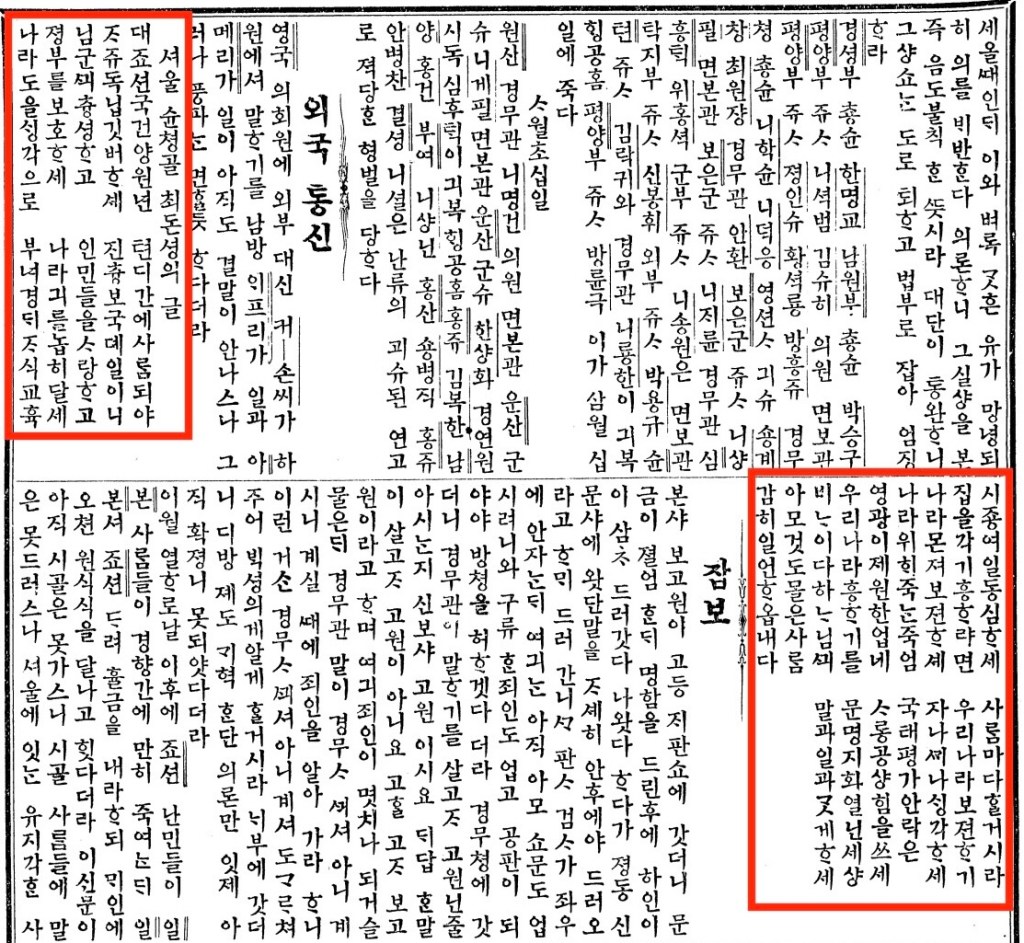
This hymn recounts the conditions of a sovereign, independent nation. It describes loyalty to the King, and protection of the government as being important to the happiness of the nation.
Patriotic Hymn by Han Myŏngwŏon
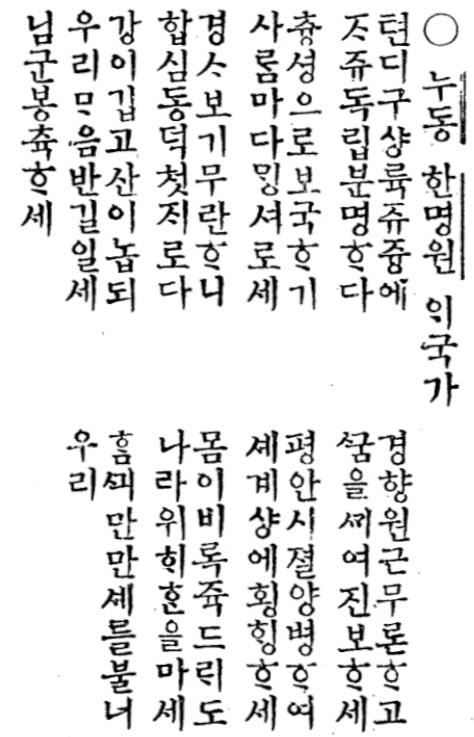
This hymn exhorts the listener or singer to make sacrifices for the country and celebrate the king.
Patriotic hymn by Ri Yongu
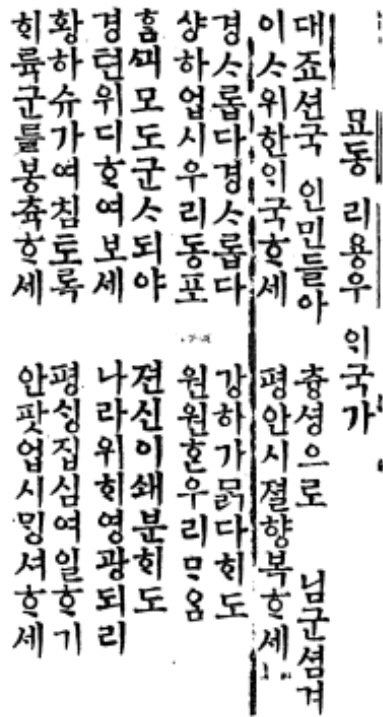
Exhorts the Listener to be patriots serving and sacrificing for the country.
Patriotic hymn by Christians in Great Korea’s Talssyŏng Hoedang
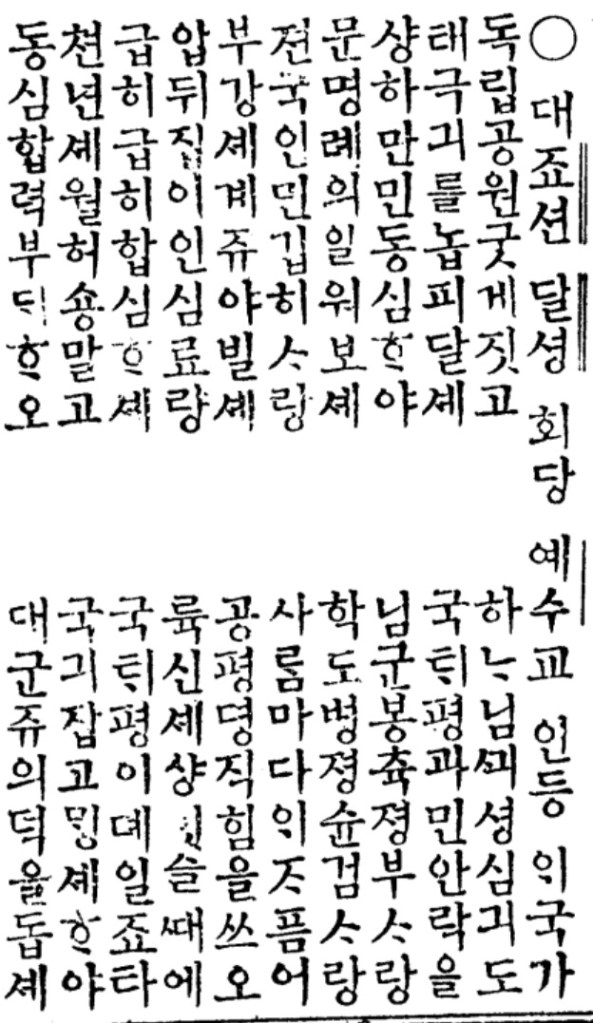
The hymn above describes the Independence Gate and national flag as national symbols, and exhorts the listeners and singers of all status to work in harmony with love to make Korea a great nation.
EDIT ME Author? “Taejyosyŏn talssyŏng hoedang yesugyo indŭng ŭigukka” Tongnip sinmun, July 23, 1896.
Independence Song by Mun Kyŏngho
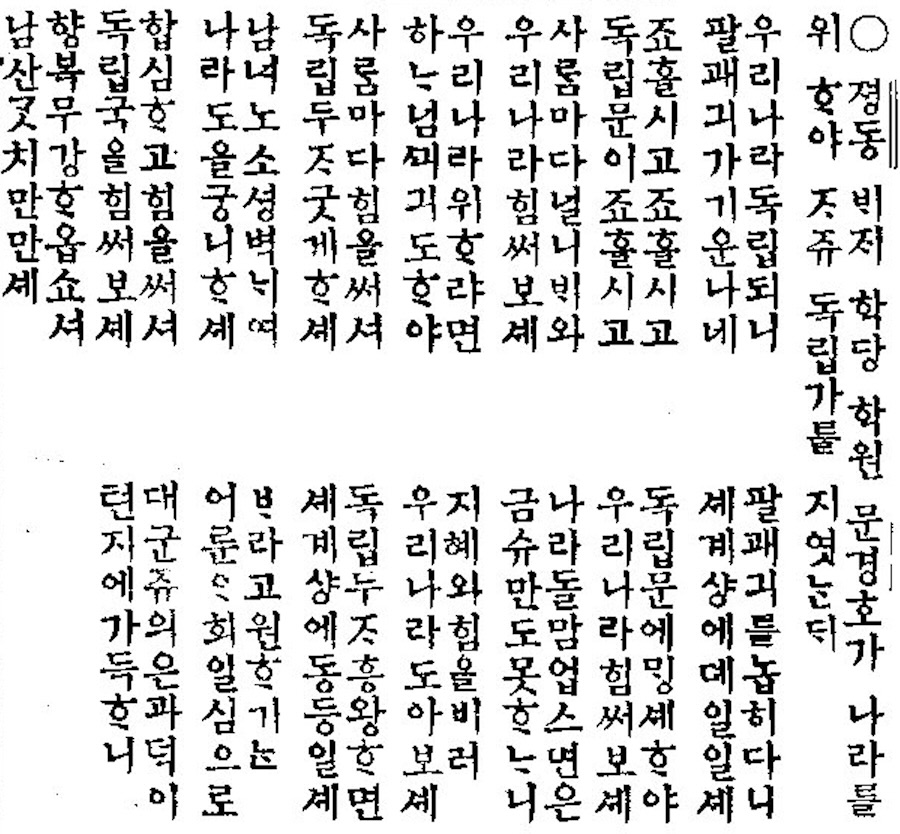
Mun’s hymn describes the Independence Gate and national flag as national symbols, and exhorts the listeners and singers to work together so that the nation can finally be equal on the word’s stage.
Patriotic Hymn by Kim Chyongsyŏp
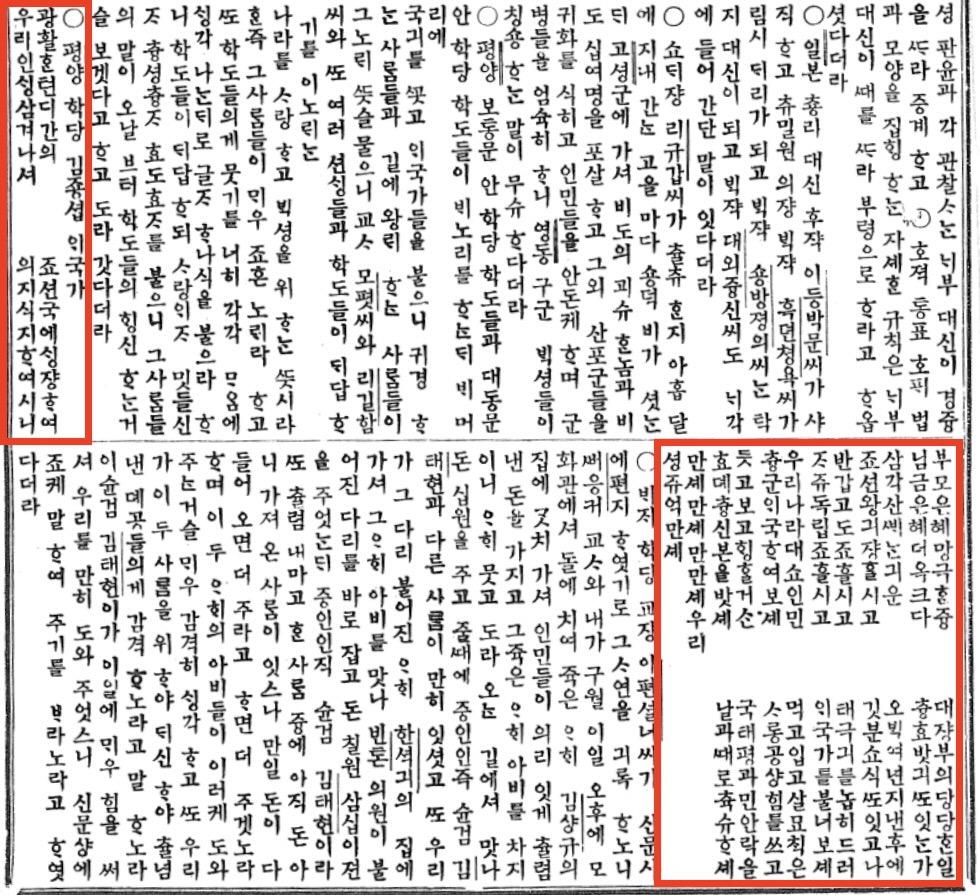
This patriotic hymn exhorts the listeners and singers to be loyal to the country and King to ensure national prosperity.
Celebration Song by Kim Kibŏm
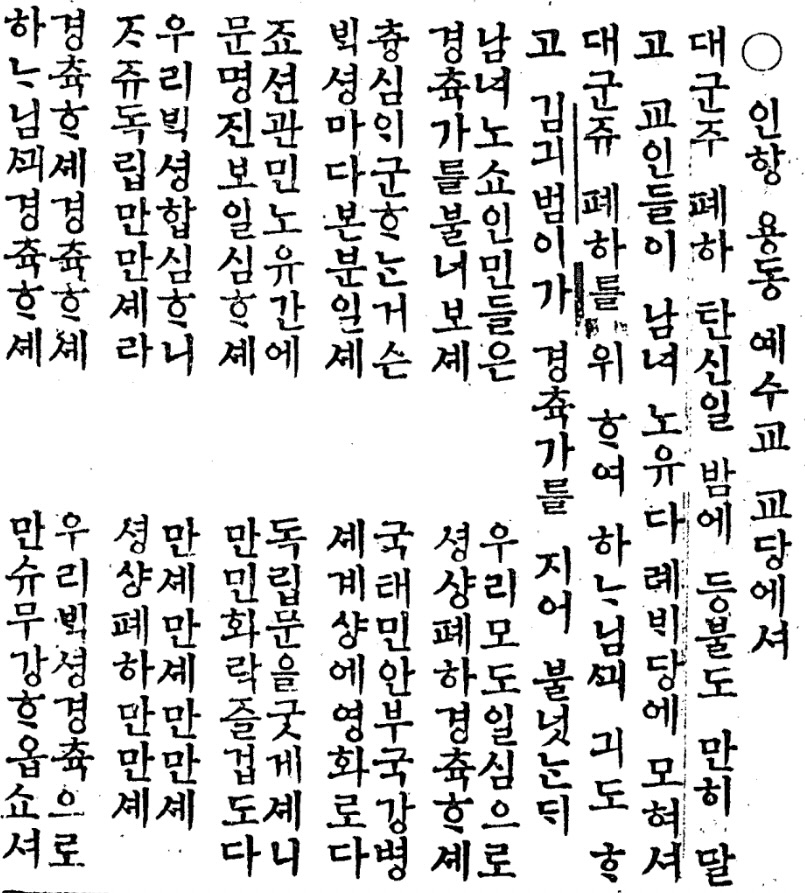
Kim’s song portrays everybody coming together with one mind to sing a song of celebration for the King.
Independence Song by Ch’oe Pyŏnghŏn
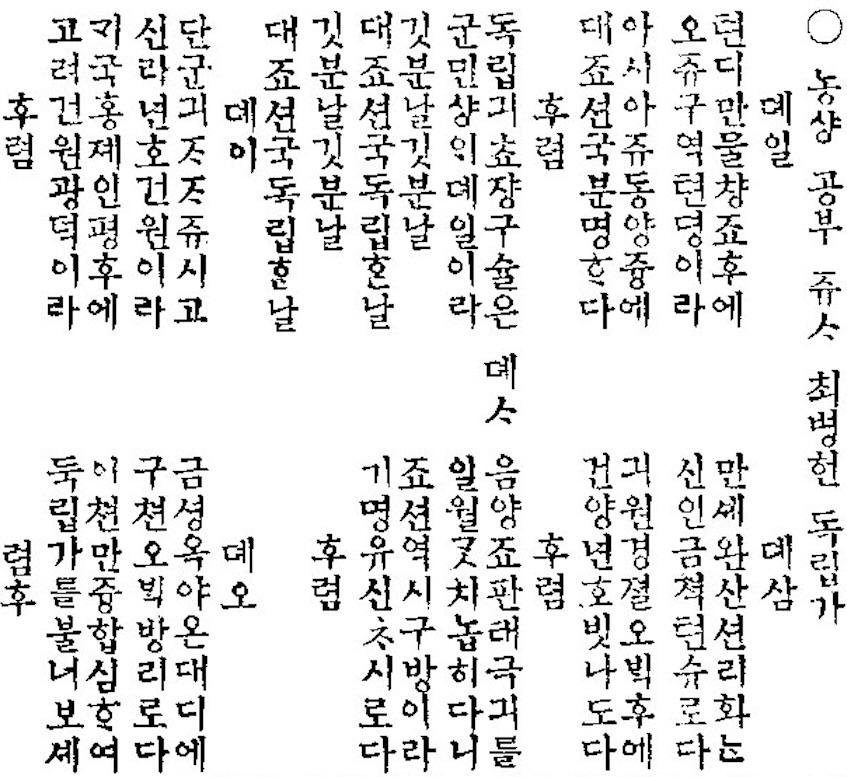
This independence song contains lyrics which trace the current king to a genealogy of independent nations.
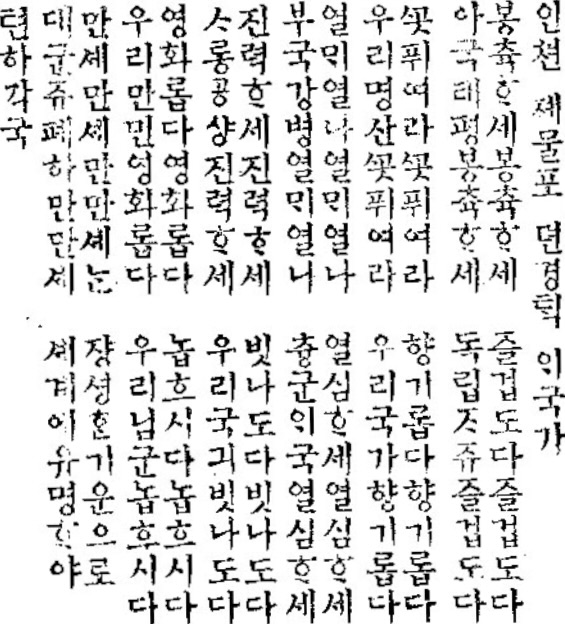
Patroitic Hymn by T’yŏn Kyŏngt’aek
 Pacific Voicings